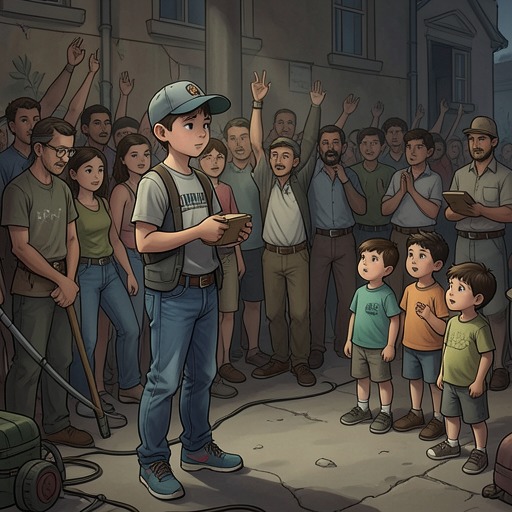
Robert and Mike open a comic-book library
Rich Dad Poor DadRobert and Mike open a comic-book library after Robert recognizes that the discarded comics at the store where they work for free can become the basis of a business. The venture converts unpaid work and close observation into an income-producing operation, demonstrating Rich Dad’s lesson that a business can make money for its owners even when they are not physically present.
From Discarded Comics to an Opportunity
After several weeks of thinking, talking, and working without pay, Robert again looks longingly at the comic-book stand because he cannot afford to buy comics. As Mrs. Martin says goodbye to the boys, he notices her cutting each comic’s front cover in half, keeping the top portion and throwing the rest into a large brown cardboard box. The familiar disposal routine suddenly becomes visible as an opening: the comics are being discarded, not sold.
Robert asks Mrs. Martin what she does with them. She explains that she returns the top half of each cover to the distributor for credit when he brings in new comics. Robert and Mike wait an hour for the distributor, then ask to take the discarded books. He agrees on the condition that they work for the store and do not resell the comics. The restriction shapes the enterprise: the boys will charge for access to a place to read, rather than sell the books themselves.
Building and Running the Library
Mike’s mother provides an unused basement room. Robert and Mike clean it out, gather hundreds of comics, and open the library to neighborhood children. They hire Mike’s younger sister, who loves to study, as head librarian. For ten cents, customers can read as many comics as they can during the two-hour opening period, from 2:30 to 4:30 each afternoon after school. Since a single comic also costs ten cents, children could read five or six in the library for the price of one.
The operation depends on more than the boys’ initial idea. Mike’s sister checks that children do not borrow books and keeps records of daily attendance, customers’ names, and their comments. Robert and Mike continue working at the store each Saturday, collecting comics from different shops, and honor their agreement with the distributor by not reselling them. When books become too worn, they burn them. Over three months, the library averages $9.50 per week. They pay Mike’s sister one dollar weekly and let her read for free, though she rarely does because she is busy studying.
Limits, Closure, and the Lesson
The boys try to open a branch, but cannot find someone as trustworthy and dedicated as Mike’s sister. Their difficulty finding reliable staff teaches them early that operating a business depends on people as well as an idea. Three months after the library opens, bullies from another neighborhood push their way into the room and start a fight. At Mike’s father’s suggestion, the boys shut the business down and stop working Saturdays at the convenience store.
The library’s closure does not erase what the experiment has taught them. Rich Dad is pleased that they have learned to make money work for them: unpaid work forced them to use their imaginations to identify an opportunity, and owning the library placed their finances under their control rather than an employer’s. Its defining result is that it generated income even when Robert and Mike were not there. In Rich Dad’s account, the money they made mattered less than the lesson embodied by the venture: they had created a business instead of relying solely on wages.